
From machinist to designer:
Wie Bercos Shopfloor-Revolution einen Traditionshersteller transformierte
MATTEO CESARI
Chief Operating Officer
Berco S.p.A.

CARLO TRIVELLATO
Senior Expert
Staufen, part of Accenture
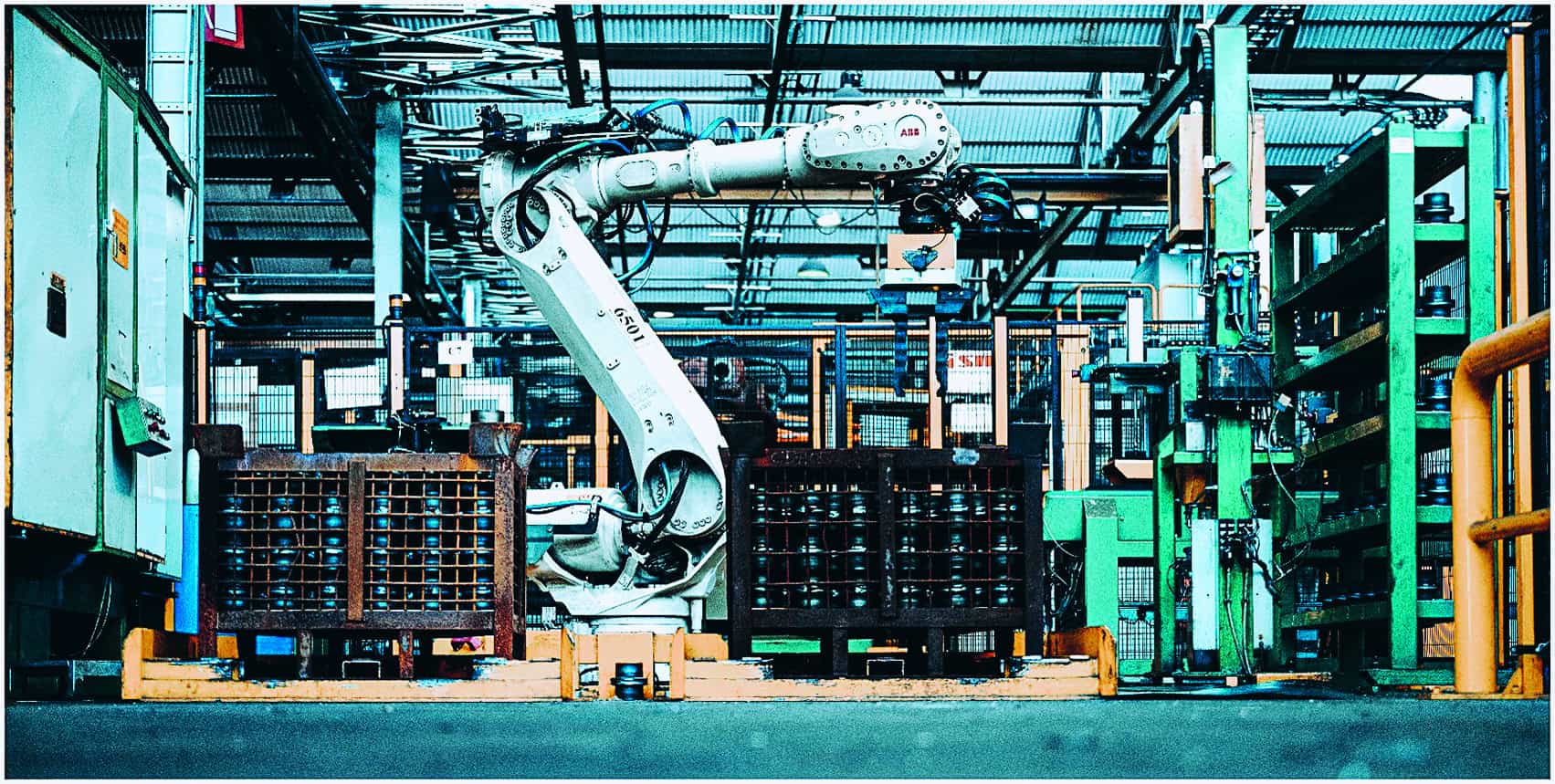
In Copparo, northern Italy, there’s an industrial site so vast that it takes half an hour to walk through it. Berco has been manufacturing chassis components for tracked earthmoving machines here since 1920.
Although the company has invested millions in modernizing its facilities in recent years, there was still a gap between management’s vision and implementation on the shop floor.
In cooperation with Staufen, part of Accenture, a transformation process was created that not only improved processes but also realigned the entire corporate culture – with people as the central success factor.
More than just physical renewal
When Staufen Italia consultants first toured the plant in 2022, they encountered a stark contrast: Despite extensive investments in machinery and new layouts, there were still many opportunities to improve daily operations.
“We found that the infrastructure had been modernized, but day-to-day management and the link between business objectives and shop floor activities needed stronger connections,” recalls Carlo Trivellato, Senior Expert at Staufen Italia. This assessment revealed a key insight: While Berco had invested heavily in technical transformation, it lacked the appropriate human systems to fully leverage these investments.
“The previous project had focused primarily on machinery, layouts, and technology—with the potential to increase the involvement of the people operating these systems,” explains Trivellato. Team leaders spent much of their time dealing with acute problems rather than proactively managing them. “They were navigating between difficulties rather than addressing them systematically. They were treating symptoms without always considering the root causes. We needed to reconnect the steering wheel to the drive.”
A manager with shop floor experience
Matteo Cesari, whose unusual career path was crucial to the transformation, entered this environment. He started in 2006 as a temporary worker in roller assembly at Berco and worked his way up to Chief Operating Officer by 2023.
“Back then, I stood at the machine myself and found ways to make the line run faster than the manufacturer intended,” Cesari recalls. This hands-on approach accompanied him through many operational roles – and gave him an insight that few managers possess.
“What makes the difference here is understanding the people,” says Cesari. “When you rise from operator to top management, you really have to understand what’s happening in the processes. But recognition as a leader only comes from the people.”
Finding the real causes
When Cesari took over as COO, he quickly realized that communication was the key area that needed improvement. “When I looked at the company from the employees’ perspective, it was immediately clear to me that we had a communication problem,” he says.
Staufen’s assessment confirmed this impression – through extensive shadowing, in which the consultants spent several days side-by-side with team leaders to understand their challenges. “We gave management a clear picture of how people were using their time,” reports Trivellato. The results showed that many managers needed more support and guidance.
Breaking with traditions
At the beginning of his tenure, Cesari made a strategic decision: He dissolved the previous structure of separate mini-companies and replaced it with a unified model with a clear culture and no redundancies, enabling faster market response. This reorganization coincided with the launch of the Excellence Project in partnership with Staufen – a program focused on cascade communication (“ReCo”) and leadership development.
“The only thing that could have caused this project to fail was the people’s attitude,” Cesari emphasizes. “Previous initiatives failed precisely because of this – because trust was lost.”
Presence as a basis for engagement
The first critical step was to strengthen the connection between management and the shop floor. “The visibility of managers had to evolve from occasional, formal visits to genuine dialogue,” explains Trivellato. “These encounters should become opportunities for genuine listening and collaborative problem-solving.”
Staufen’s approach placed great emphasis on on-site time with team leaders. “They realized that we were genuinely interested in their work. We weren’t just there to observe processes, but to develop solutions together.”
Responsibility instead of instructions
At the heart of the transformation was the shift from top-down directives to genuine personal responsibility. Instead of specifying specific KPIs, Cesari and the Staufen team encouraged team leaders to determine the indicators that would help them achieve the company’s goals.
“When they asked, ‘Which KPIs should we use?’ I said, ‘You decide. You know best which metrics are relevant for your area,'” says Cesari. “All that matters to me is that your KPIs contribute to my goals—how you measure progress is up to you.”
This approach sparked constructive competition between departments. Initially, around 30 percent of team leaders were working according to the new system; after three months, that number had risen to 50 percent—the more successes became visible, the greater the acceptance.


Simplify structures
A key step was reducing teams from 40 to 50 people to units of around 20. These smaller groups pooled various skills – from maintenance and quality to production and logistics – under a single leader, often selected by the employees themselves.
“Managing 20 people is completely different,” explains Cesari. “It’s like a football team – the dynamic is much more cohesive.”
The result was better communication and a greater sense of accountability – everyone saw more clearly what their contribution was.
Measurable results in a short time
The impact of the changes was quickly visible: Within six months, the number of escalations fell by 50 percent, and after one year, by as much as 75 percent.
In addition to the improvements in communication, Berco achieved concrete operational progress:
- Higher productivity
- Better output control
- Clear identification of downtime causes, enabling targeted countermeasures
- Shorter order processing times
“The biggest advantage is that we now have time to focus on truly value-added tasks,” says Cesari.
The practical test came during a period of labor disputes and shutdown: When operations resumed, the communication structure functioned as before. “When everyone returned, no one had forgotten anything,” says Cesari. “We immediately resumed using the same method.”
Creating a foundation for the future
Berco plans to roll out the ReCo system to all business areas by the end of the fiscal year. For Cesari, this means establishing a system that is sustainable, independent of individual people.
“I don’t see it as a role, but rather as a responsibility: ensuring that the agreed rules and processes are adhered to,” he emphasizes. “My most important contribution is to step back and let others take the lead. This is proof that the change is truly sustainable.”
Even though many approaches are based on established methods, success lies in consistent adaptation to the local situation. “It’s tailor-made,” says Cesari. “A solution that’s a perfect fit for our company here in Italy.”
LEARNING:
Lessons for other manufacturers
Berco’s transformation offers valuable insights:- Balance between technology and people:
Investments in assets always require parallel development of the organization. - Leadership presence:
Regular, authentic communication builds trust and delivers insights. - Empower teams:
Those who choose their own KPIs take responsibility. - Right team size:
Small, interdisciplinary groups promote problem-solving and accountability. - Leadership at all levels:
Frontline leaders are the link between strategy and implementation.
In an industry where many initiatives fail, Berco shows that with the right approach, real change is possible.

About Berco
Founded in 1920 in Copparo, Italy, Berco has grown from a small agricultural machinery repair shop to a leading manufacturer of undercarriage components for tracked earthmoving equipment. On its 550,000 square meter factory site, the company processes 130,000 tons of steel annually to produce 200,000 chains, 1,000,000 track rollers, 120,000 wheels, and 5,000,000 track shoes. With customers in 84 countries and an export share of 90 percent, Berco is synonymous worldwide with the highest level of Italian manufacturing quality.
Order magazine
Our magazine focuses on success stories that show how companies are addressing these challenges in order to remain competitive in their market environment. Our articles are written by customers, partners, and colleagues who share their practical experiences with us.

You may also be interested in:

FRIEM – Performance Improvement is driving the energy revolution

PALFINGER Production System
REQUEST THE MAGAZINE NOW AS A DIGITAL VERSION OR PRINT EDITION
